

Curriculum Outline — Rock Climbing Class (Interstate Park, MN/WI)
Self-introductions (instructor and participants)
Overview of outdoor climbing types: bouldering, sport, trad — plus low‑impact climbing practices and climbing access ethics to protect crags and local access
Climbing gear essentials: harnesses, shoes, helmets, PAS or equivalent, locking and non‑locking belay devices, carabiners, crash pads — care and storage tips to extend gear life and avoid damage
Bouldering fundamentals: how to lay and move crash pads, spotting, topping out and walking off — followed by hands‑on practice
Route prep and safety: route finding, setting up at the base, recognizing hazards (rockfall, weather), and etiquette for sharing the crag
Ropework and belaying: flaking rope, closing the system, tying in, belay techniques, and voice commands
Outdoor climbing techniques: smearing, jamming, body positioning on low‑angle rock, reading the rock — with guided practice in climbing and belaying
Anchor overview: basic anchor principles and inspection
Q&A and extra practice time based on participant requests
Gym to Crag
Designed for gym climbers ready to move outside, the Gym to Crag course gives you the skills, practice, and confidence to climb real rock along the scenic St. Croix River in Interstate Park (MN/WI). This hands-on program emphasizes actual climbing time—more than most introductory courses—so you learn by doing.
Who this course is for
Indoor gym climbers who want to start outdoor top rope and/or bouldering.
Climbers who want guided practice rather than a full technical rescue or advanced trad clinic.
Ages 8–103 (we also work with younger climbers) looking for safe, fun progression from plastic to stone.
What you’ll learn
Top rope climbing and belaying: safe belay techniques, command protocols, and real-rope practice on outdoor anchors.
Anchor overview: basic outdoor anchor concepts so you know how anchors differ from gym set-ups.
Bouldering & spotting: outdoor bouldering movement, risk awareness, and proper spotting techniques.
Outdoor climbing techniques: footwork, route reading, clipping strategies, and efficient movement on rock.
Route finding: reading natural lines, identifying protection points, and planning your ascent.
Outdoor ethics & Leave No Trace: responsible practices for preserving crags and the St. Croix River corridor.
Why Gym to Crag is different
More climbing, less lecture: this course intentionally includes the highest amount of on-rock time of any beginner outdoor program.
Local expert guides: Forged Guides specializes in Interstate Park climbing—local knowledge of routes, conditions, and safety.
Progressive, confidence-first approach: tailored to gym climbers’ strengths while teaching real-world differences of outdoor climbing.
Logistics
Location: Interstate Park, MN/WI, along the scenic St. Croix River.
Duration: Half-day and full-day options available.
Group sizes: Small groups for personalized coaching and safety.
Gear: We provide helmets, harnesses, ropes, and technical equipment; participants should bring, weather-appropriate clothing, water, snacks. and sunscreen/bug spray.
Book your next step from the gym to the crag.
Ready to climb real rock with skilled local guides? The Gym to Crag course is the fastest, safest way to make the transition while spending the most time actually climbing. Join Forged Guides for exciting, friendly instruction on the cliffs of Interstate Park.
Schedule your Forged Guides Trip here!
“Life is either a daring adventure or nothing at all.” - Helen Keller.
Feel free to reach out with any questions. Our Forged Guides team looks forward to climbing with you!
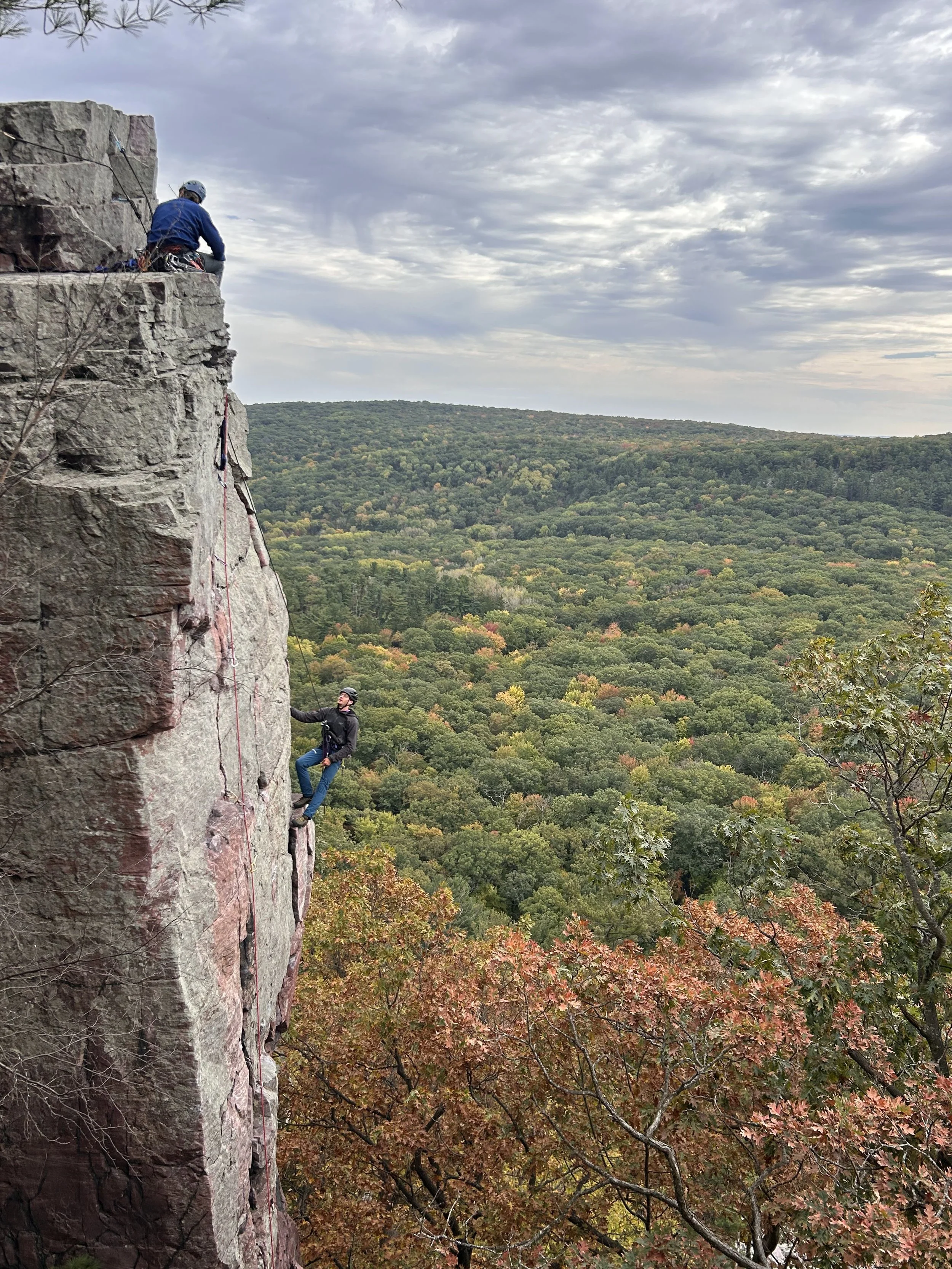

Know Before you Go - Interstate Park
Interstate State Park, straddling the Minnesota-Wisconsin border, boasts a captivating natural history. Shaped by glacial forces, the park showcases dramatic basalt cliffs, beautiful river views, and unique geological formations like the renowned glacial potholes. This ancient landscape supports diverse ecosystems, including old-growth forests, vibrant wetlands, and the scenic St. Croix River, offering opportunities for wildlife viewing, hiking, and exploring the region's rich geological past.